
Lap time is the most visible metric in racing.
It is also the most misleading.
Teams rarely collapse because the car is slow. They collapse because the structure behind the car fractures.
Authority becomes unclear.
Information moves too slowly.
Operations misalign.
Commercial pressure overrides engineering discipline.
Speed exposes problems.
Structure determines survival.
Inside every serious motorsport organization, five roles determine whether performance is stable or fragile.
Race Engineer: The Authority Filter
The race engineer is not just the person on the radio.
They are the authority node.
Every signal driver feedback, tire data, competitor delta, weather change compresses into a decision layer. That layer lives with the race engineer.
When authority is clear, performance flows.
When authority is diluted when too many voices influence the call hesitation creeps in.
Hesitation costs tenths.
Tenths become grid position.
Grid position becomes race outcome.
Industry truth: Most performance breakdowns are authority breakdowns.
Performance Engineer: The Probability Layer
Performance engineers do not chase lap time.
They chase probability.
They quantify degradation curves.
They model fuel windows.
They track performance variance across long runs.
They are not reacting to what happened.
They are forecasting what will happen.
Without this layer, strategy becomes emotional.
And emotional strategy loses races.
Team Operations Manager: Structural Discipline
Engineering excellence cannot compensate for operational instability.
Travel delays.
Personnel misalignment.
Equipment readiness errors.
Schedule compression.
These do not show up on broadcast.
But they erode performance before a wheel turns.
Operations managers create repeatability in a sport built on variability.
The best teams are not the most brilliant.
They are the most consistent.
Consistency is operational.
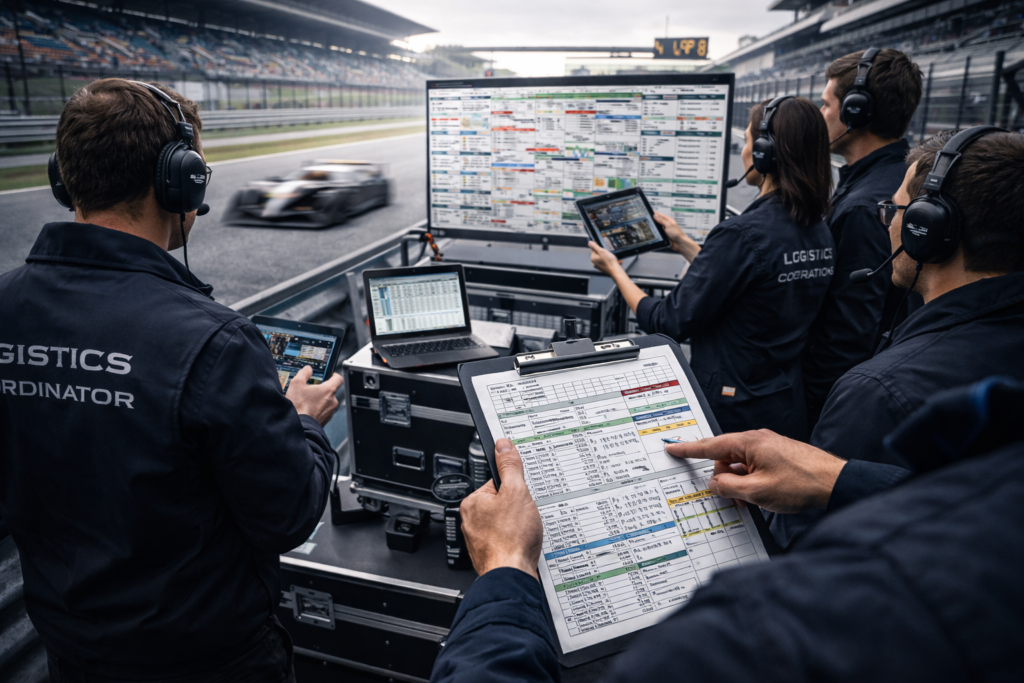
Logistics Coordinator: Competitive Infrastructure
Global racing is freight management under pressure.
Customs clearance.
Transport sequencing.
Spare part control.
International compliance.
One failed document can erase months of preparation.
Logistics is not support work.
It is competitive infrastructure.
Without movement, there is no performance.
Sponsorship Manager: Sustainability Control
Performance costs capital.
Development costs more.
Sponsorship managers ensure continuity.
They balance commercial expectation with competitive reality.
They align partner deliverables without disrupting engineering focus.
Too much commercial pressure fractures authority.
Too little commercial strength collapses the budget.
Financial oxygen determines how long performance can evolve.

The Uncomfortable Truth
Fans analyze drivers.
Media analyzes speed.
Professionals analyze structure.
The teams that endure over seasons not just weekends are not always the most aggressive.
They are the most aligned.
Clear authority.
Disciplined data flow.
Operational consistency.
Commercial sustainability.
Motorsport is not won by speed alone.
It is sustained by structure.